The Exit Is Part of the Invitation: Designing Openings That Don’t Demand a Performance
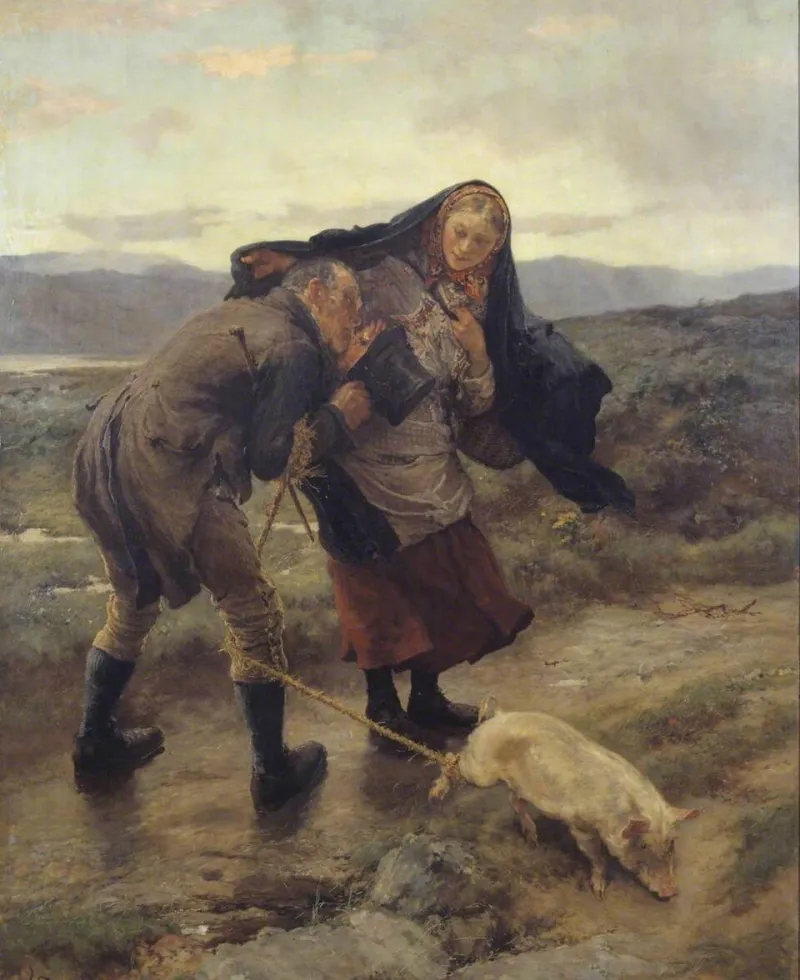
Photo: William Small, Public domain, via Wikimedia Commons
There is a particular kind of loneliness that happens in a packed room. You’re at a private view, holding a warm drink you don’t really want, nodding at someone whose name you’ve forgotten, and quietly calculating how long you have to stay before leaving looks rude. For plenty of people — neurodivergent folk, sober guests, disabled visitors, anyone who finds crowds physically draining — that isn’t a minor inconvenience. It’s the reason they don’t come back.
We talk a lot in the UK arts sector about access as ramps and captions, and those things matter. But access is also whether someone can hear themselves think. It’s whether there’s a chair that isn’t in the toilet corridor. It’s whether the host knows your name and whether the room has a corner that doesn’t ask you to perform.
My argument is simple: at an opening night, hospitality is part of the artwork. It shapes what the work feels like, who gets to stay, and what kind of memory people carry home. If we treat it as an afterthought, we’re not just bad hosts. We’re quietly editing the audience.
The private view has a body problem
Most openings are designed for the fantasy guest: sociable, standing, noise-tolerant, free from caring responsibilities, and happy to stay for three hours. That person exists, and I’m glad for them. But they are not the whole room. In 2026, with arts budgets stretched and audiences pickier about how they spend their evenings, we can’t afford to build events around a narrow idea of who shows up.
The good news is that the fixes are rarely expensive. They are mostly decisions. And they often make the night better for everyone — including the artist’s mum, the tired curator, and the neighbour who came because the door was open.
Name a host, not a bouncer
One of the simplest changes is to have a named host for the evening. Not a security presence. Not a volunteer who was briefed for ninety seconds and then abandoned. A person who knows the building, can point to the quiet corner, can explain the timings, and can introduce people who might get on.
Put that person’s name on the invitation. ‘Your host tonight is Sam’ does more than a generic email address. It tells guests there is a human to look for. It also gives the host permission to do the job properly: welcome people at the door, keep an eye on the room, and notice when someone is hovering at the edge.
At a small launch in Leeds last year, the host wore a bright yellow badge that said ‘Ask me where the quiet bit is.’ It sounds almost too simple. It was also the most useful piece of signage in the building.
Signage is a love language
Clear signs are not bureaucratic clutter. They are care. At the entrance, tell people where the toilets are, where the quiet space is, whether there is step-free access, and what time the speeches start. Inside, label the drinks table and the food so sober guests and people with allergies aren’t forced into a guessing game.
Use large print. Use plain language. Put the important information at eye level, not taped to a pillar behind a coat rack. If the event has a loud section and a calm section, say so. If the gallery is dark, say that too. Surprises are lovely in art. They are less lovely when you’re trying to work out whether you can safely cross the room.
Timed entry beats a crush
There is a special kind of misery in arriving at 6pm because the invitation said 6pm, only to find the room already at capacity and the doorway blocked by a conversation. Timed entry can help. It doesn’t have to be rigid. Offer a first hour for people who want a calmer look, then open the doors wider. Publish the rough rhythm: 6–7pm quiet viewing, 7.15pm welcome, 8pm music.
This isn’t about policing fun. It’s about giving people a way in. A guest who knows they can arrive early, see the work, speak to the artist, and leave before the room fills is far more likely to come at all. And the people who want the buzz can still have the buzz later.
Build a corner that asks nothing
Every event needs a low-demand corner. A couple of chairs. Softer light. Maybe a table with a puzzle, a stack of zines, or just a plant and a bit of wall. Somewhere a person can sit without being asked what they think of the show. If you can, make it visible from the main room so people don’t feel exiled, but not so central that they feel watched.
Call it a quiet corner, a pause space, a breather bench — whatever fits the tone. Just don’t call it ‘the chill-out room’ and then fill it with beanbags and a strobe. The point is low stimulation, not a side quest.
Sober doesn’t mean boring
A lot of UK private views still treat alcohol as the social lubricant and the only real option. It doesn’t have to be that way. Good alcohol-free beer, a proper soft drink, and a jug of water with actual glasses are not extravagant. They are basic hospitality. If the event is sponsored by a brewery, fine — but make sure there is something else that feels considered, not like an afterthought in a plastic cup.
And please stop making the toast a compulsory drinking moment. A raised glass of anything works. The point is the room, not the units.
The budget line you forgot
None of this needs a huge budget. A named host can be a staff member or a paid freelancer for two hours. Signs can be printed in-house. Timed entry is a communication decision. A quiet corner is often a case of moving two chairs and turning off a spotlight. The bigger cost is usually the cost of changing habits.
But if you’re applying for funding in 2026, consider putting access hospitality in the budget as a real line, not a vague promise. Host time. Signage. Alcohol-free drinks. A taxi fund for disabled guests. Childcare contributions. These are not extras. They are the infrastructure of who gets to be in the room.
The opening night is not the whole project, but it is the doorstep. If the doorstep is hostile, people won’t come inside to see the work. Design the exit, the corner, the sign, and the welcome. Then the artwork has a chance to do what it came to do: meet someone.