The Route Is the Script: Making Locative Audio That Belongs to a High Street

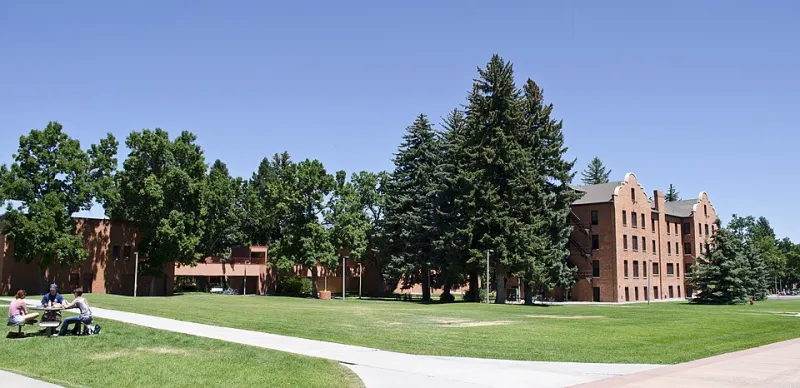
Photo: Wilfredor, CC0, via Wikimedia Commons
We’ve listened to a lot of audio walks in the last two years, and a pattern has emerged. You download something, you put your headphones in, and a voice tells you about the history of a building you are standing in front of. The information is accurate. The production is lovely. And you could have heard exactly the same thing on a bus.
That’s not a walk. That’s a podcast with a map attached — the street is decoration, not structure. The test we now apply is simple and slightly brutal: if we moved the whole thing to a different high street, would the piece break? If the answer is no, we haven’t made locative work yet.
The route is the script
Good locative audio is written by the walk, not by the research. Where you turn, when the pavement narrows, when a shopfront suddenly interrupts, when the bus shelter forces you to stop — those are beats. A route with nine stops and no rhythm is nine podcasts in a trench coat.
Start by walking it. Not on Street View. Actually walk it, at the time of day you expect people to use it, and write down what happens to your body. Where do you slow down? Where do you get shoved? Where does it smell of frying? Where is it too loud to hear a whisper in your ears?
Then design the audio to answer the street rather than describe it. If the piece says “look up” and there’s a lovely bit of tilework above the kebab shop, that’s a collaboration between the writing and the place. If the piece says “imagine the market that stood here in 1890” while you’re looking at a shuttered unit and a bin, you are asking the listener to do unpaid imaginative labour.
Whose street is it?
The most common mistake in this form is treating a high street as a subject rather than a set of neighbours. A high street is somebody’s workplace, somebody’s commute, somebody’s front door. If your walk features the area without featuring anyone from it, you’ve made a piece about your own research trip.
Practical approach:
- Interview people where they actually are. Behind the counter, on the stall, in the doorway. Not in a hired meeting room where the acoustic is dead and the answers go formal.
- Pay contributors. A shopping voucher is not a fee. If someone’s voice is in your artwork, they are a collaborator and the budget should say so.
- Let them hear it before it goes live. Play the clip back. If someone says “that’s not what I sound like”, believe them — it’s usually the edit, not the voice.
- Check what they don’t want said. The story about the landlord is funny until the lease renewal.
And be careful with the histories you inherit. A lot of local heritage content repeats a version of a place that quietly writes out the people who live there now. If your walk is 80% about a Victorian benefactor and 0% about the shop that has been there since 1978, that’s a choice, and it isn’t neutral.
Signage is not optional and not enough
You need a physical trace. A piece that exists only as a link is a piece that most passers-by will never encounter. We print a small number of weatherproof markers — a QR code, an instruction, a number, a line of text — and we put them where people already stop: the bus stop, the noticeboard outside the library, the window of a partner shop.
But plan for the digital handover too, because that is where you lose people. Nobody wants to install an app for a forty-minute walk. A web player that opens in a browser is almost always the better call. Warn people about data use and offer an offline download. Test on cheap Android phones, not just yours — the three-year-old handset in a pocket is the real device.
Testing in the wet
Do at least two test walks. One with people who know the project, one with people who don’t. Give them nothing but a link and stand back, and watch where the whole thing collapses.
It will collapse somewhere. Ours always does. Common culprits:
- GPS drift. In a narrow street between tall buildings, location can be forty metres out. Never trigger audio on location alone; always give the listener a manual “next” and a visible list of stops.
- Battery and brightness. A screen on full in daylight will chew a phone. Keep the interface dark and simple.
- Weather. Wind on a phone mic sounds like a bin lorry. Test in January, not June.
- Footfall. The bit that’s lovely on a Sunday morning is unbearable at school pickup. Write for the time you expect people, or tell them when to come.
- The earbud problem. Some people will play it aloud on speaker. Some will use one earbud and keep the other ear on the traffic. Both are fine; design so both work.
Access is a route question
An audio walk is unusually friendly to blind and partially sighted audiences, which is exactly why it’s a scandal how many are poorly made. That means: a transcript, a full description of the visual scene, clear instructions about surfaces and crossing points, a stated duration, and a warning about anything uneven, steep, or temporarily blocked by a skip.
Also check the route itself. Dropped kerbs, tactile paving that stops halfway, a pavement that’s technically passable but only just. If your piece requires a sprint across a dual carriageway at stop four, it isn’t accessible and it isn’t safe.
Then let the street answer back
We like to build in one thing we can’t control: a stop that asks the listener to stay still for sixty seconds and just listen to the actual place. No narration. It’s the moment where the work stops claiming the street and hands it back.
That, in the end, is the difference. A podcast tells you something. A walk makes you stand somewhere and find out it was already saying something without you.