What the Room Told Us: Treating Audience Feedback Like Rehearsal Material
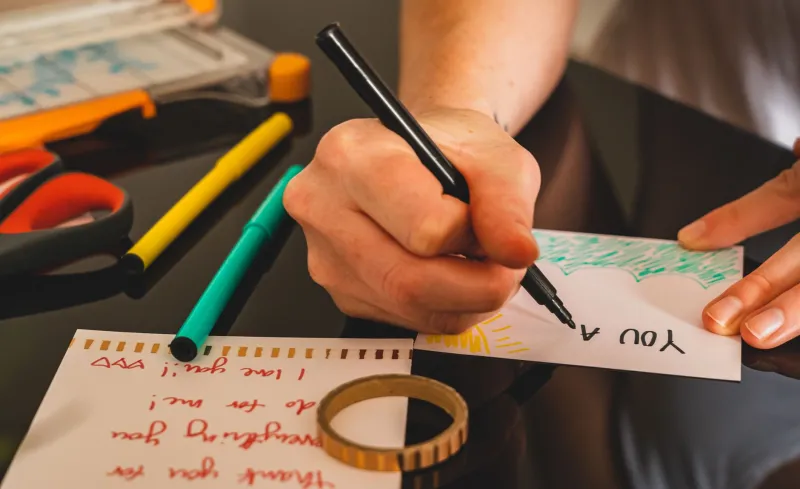
There is a particular kind of silence that follows a small UK arts event when someone appears at the back with a clipboard. The room stiffens. People suddenly need the loo. Someone who has just spent two hours being beautifully open on stage or in a library meeting room now has to perform another role: satisfied customer, or else.
At Gina Cross Projects, we have been on both sides of this. We have handed out the forms. We have filed them with the receipts. And we have learned that a feedback form is not a verdict on the work; it is a material. Treat it like rehearsal notes, not an exam paper, and it can shape the next thing you make.
Start with what you actually need to know
Most forms ask too much because nobody decided what the answers were for. Before you write a single question, finish this sentence: After this event, I need to understand…
If the answer is 'whether people liked it', stop. That is not useful enough. Try: 'which part lost people's attention', 'what someone would tell a friend outside', or 'whether the room felt safe enough to stay afterwards'. Those are questions you can act on.
A pub theatre we worked with used to ask 'Did you enjoy the show?' It got a wall of ticks. They changed it to 'What moment stayed with you?' and started getting descriptions of a single lighting cue, a line delivery, the bit where the audience laughed at something unexpectedly sad. That is creative material. It does not tell you to cut twenty minutes, but it tells you where the pulse is.
Three questions is usually two too many
A good live feedback card has one open question, one practical question, and one optional invitation. That is it.
For a library screening, the practical question might be 'Where did you lose the thread?' Library audiences are often brilliant at locating attention. They will tell you exactly when the room drifted. For a pop-up show in a vacant shop, ask 'What would you tell a friend standing outside?' It gets you language, not just a score.
The optional invitation is where collaboration actually begins: 'If you want to help shape the next one, leave an email or a voice note.' Do not make it mandatory. Do not make people feel that their opinion is only valuable if they sign up to your newsletter.
Collect in the room, not just online
Online forms are useful, especially for people who need time to think or who cannot stay. But live events have a different kind of knowledge in the room. Capture it before everyone spills onto the pavement.
Keep it low-effort and low-drama. A stack of cards on a table near the exit. A quiet corner with a voice recorder and a prompt card. A QR code that goes straight to a two-question form, no login. If you are asking for more than five minutes of someone's time, say thank you properly: a drink token, a small fee for a longer workshop, or at the very least a clear explanation of what happens next.
And do not ambush people at the door. There is a difference between an invitation and a trap. A card that says 'If you have two minutes, we would love to know what stayed with you' is an invitation. A person blocking the exit with a tablet is a trap.
Sort the notes into signal, noise and gift
When the responses come in, resist the urge to count them like votes. Feedback is not a referendum on your practice. It is a pile of material, and some of it is more useful than the rest.
I sort responses into three piles. Signal is repeated, specific and actionable: several people mention the same confusing transition, or the same moment of boredom, or the same bit they wished had gone on longer. Noise is one-off taste: someone wanted a different genre, a shorter night, or more chairs. Useful to know, not necessarily a directive. Gift is the unexpected idea you did not ask for: a suggestion for a partner venue, a memory the work triggered, a way to reframe the whole thing.
The gift pile is where feedback becomes creative material. It is also where you have to be honest about authorship. You are not obliged to make the thing someone else suggested. But you are obliged to listen properly before you decide.
Publish a 'what you told us' note
This is the bit most small organisations skip, and it is the bit that turns evaluation into collaboration. Within a couple of weeks, publish a short note. Not a corporate impact report. A plain, public 'what you told us' message.
It can be four paragraphs:
- Here is what we asked.
- Here is what we heard, including the awkward bits.
- Here is what we are changing next time.
- Here is what we are not changing, and why.
That last point matters. Saying no is part of the loop. If people asked for a later start time and your venue's licence makes that impossible, say so. If several people wanted captions earlier in the process, say when they will be available next time. If you are keeping the long middle section because it is the whole point of the work, explain that with warmth, not defensiveness.
The note does not need to be glossy. It needs to be specific. 'You told us the sound was too loud in the second half, so we are moving the desk and doing a proper sound check at the next library screening' is worth more than a page of thanks.
Close the loop in the next project
Feedback only becomes collaboration when people can see it in the work. Put the note on your website. Mention it at the start of the next event. Credit the room, not just the artist. If someone gave you a gift of an idea, ask before you use their words publicly.
At a recent pop-up show, a visitor wrote: 'I came in because the door was open and I was early for the bus. I stayed for forty minutes.' That is not a rating. It is a piece of writing about access, curiosity and the texture of a high street in the afternoon. We used it to rethink how we write invitations for the next project. The form was not the end of the evening. It was the first draft of the next one.
So the next time you print a feedback card, ask yourself what it is for. If the answer is 'because funders expect it', fine, but do not stop there. Make it a question worth answering. Make it a conversation you intend to continue. The comment card is not a receipt. It is a way of letting the room into the room.