Mind the Glassware: How to Record a Live Podcast Without Sanding Off the Room
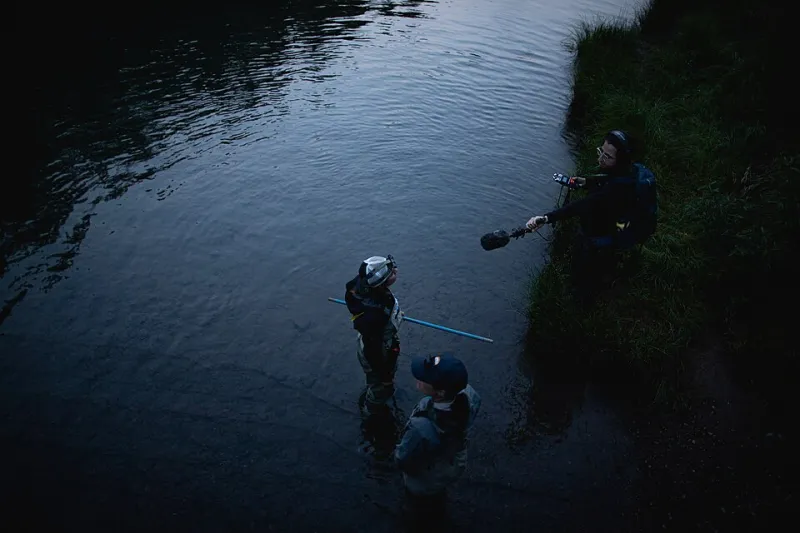
Photo: GlacierNPS, Public domain, via Wikimedia Commons
There is a moment, about twenty minutes into a live podcast recording in a pub back room, when someone’s glass meets a table with a sound like a tiny church bell. Everyone freezes. The host apologises. The audience laughs. And if you are the person holding the recorder, you have a choice: treat that clink as a disaster, or admit that it is part of the show.
I think you should admit it. A live podcast is not a studio interview with witnesses. The room is a co-host. The carpet, the low ceiling, the quiz night bleeding through the wall, the person at the back who has clearly come straight from work and is now eating crisps with real commitment — all of it shapes how the conversation lands. Your job is not to remove the room. It is to stop the room from swallowing the audio.
The room is not noise. It is context.
Studio podcasting has spent years chasing a kind of acoustic nothingness: dead walls, close mics, clean edits. That is fine for some formats. It is a terrible fit for a live night in a UK pub back room or a community hall with a stage that is really just a slightly raised bit of floor.
When people buy a ticket for a live recording, they are not paying to watch you achieve a pristine vocal chain. They are paying for the alchemy of being in the same space as the conversation. The laugh that arrives a half-second late. The heckle that turns out to be useful. The collective sigh when someone says the thing everyone was thinking. If you noise-reduce all of that into a flat little file, you have made a recording of a room that no longer exists.
The trick is to capture the room on purpose. Let the atmosphere sit underneath the voices, not on top of them. Think of it like a mix with three layers: speech first, audience second, room third. If the room is louder than the speech, you have a problem. If the room is absent, you have a different problem.
Mic placement for rooms that were never designed for it
Most pub back rooms are acoustic chaos. Hard tables, low ceilings, a fridge that hums in B-flat, a corridor door that slams every time someone goes to the loo. You cannot fix the architecture. You can work with it.
Start with dynamic microphones rather than sensitive condensers. A cardioid dynamic mic on a stand, placed close enough that the speaker almost has to lean in, will reject a surprising amount of room. Put one on the host, one on the guest, and — if the format allows — a handheld or a couple of audience mics on stands near the front. Do not rely on a single mic in the middle of the table and hope.
Record multitrack if you can. A cheap interface and a laptop will give you separate channels for host, guest and room. That means you can lift the audience in the edit when they laugh and pull them down when someone scrapes a chair for eleven seconds. If multitrack is not possible, record a safety track from a second device placed near the stage. It is not glamorous. It is insurance.
Set your gain before the room fills. Ask someone to walk around clapping and talking while you listen on headphones. Then ask the venue to switch off the extractor fan if it is on the same circuit as the lights. You will be surprised how often they say yes.
Consent has to be visible, not buried in a link
Recording a live audience means asking for consent in a way that people can actually see and understand. A QR code on a ticket confirmation is not enough. Put a sign at the door. Put a sign on each table. Make an announcement before you start that is warm, clear and not read like a terms and conditions page.
Something like: we are recording this for the podcast, the audience is part of the sound, if you would rather not be picked up by the audience mics there is a seating area to the left, and you can ask us to cut anything at the end. Then mean it. Have a named person on the door who can answer questions. Keep a simple release form for anyone who asks a question on mic, and make the opt-out route genuinely comfortable rather than a walk of shame.
This is not just admin. It changes the tone. An audience that knows where it stands is more relaxed, and a relaxed audience sounds better.
Keep the questions in the edit
One of the worst habits in live podcast production is treating audience questions as a bonus segment to be trimmed if the episode runs long. The questions are often where the real texture lives. They are also where the room proves it is not a laugh track.
If you are planning a small UK tour in 2026, build the format around that. Leave ten minutes at the end for questions and record them properly. Repeat the question into a mic before answering it, not because the podcast listener is stupid, but because the room is loud and the question will otherwise be a rumble. Use a handheld mic for the questioner if you can, or have a runner with a recorder. Thank people by name if they want to be named.
In the edit, keep the question, keep the laugh, keep the pause where the room works out what has just been said. Cut the bit where someone’s phone goes off, unless it is genuinely funny. That is the judgement call.
A small live podcast checklist for 2026
- Visit the room at the same time of day as the recording. A back room at 2pm is a different animal from a back room at 8pm.
- Ask the venue what else is happening that night. Quiz nights, darts teams and tribute acts do not mix with quiet interviews.
- Bring gaffer tape, spare batteries, a power extension and a backup recorder. Bring more than you think you need.
- Test the PA and the recording setup separately. The room sounding good to the audience does not mean the recording sounds good.
- Record thirty seconds of room tone before doors open. You will want it later.
- Put consent signage at the door and on tables. Brief the host to make an announcement that sounds human.
- Nominate someone to manage the audience mic and the opt-out seating. Do not leave it to vibes.
- Capture a clap or a hand signal at the start of each take so you can sync audio later.
- Do not over-clean the audio. A little glassware is evidence of life.
- Publish a transcript and captions. Live rooms are messy; the accessible version should not be.
The point of a live podcast is not to pretend the pub back room is a studio. It is to let the room do what only a room can do — gather people, make them feel part of the conversation, and leave a bit of itself in the recording. Mind the glassware. Then keep it in.