The Shared Studio Floor: A Practical Guide to Creative Partnerships That Actually Last
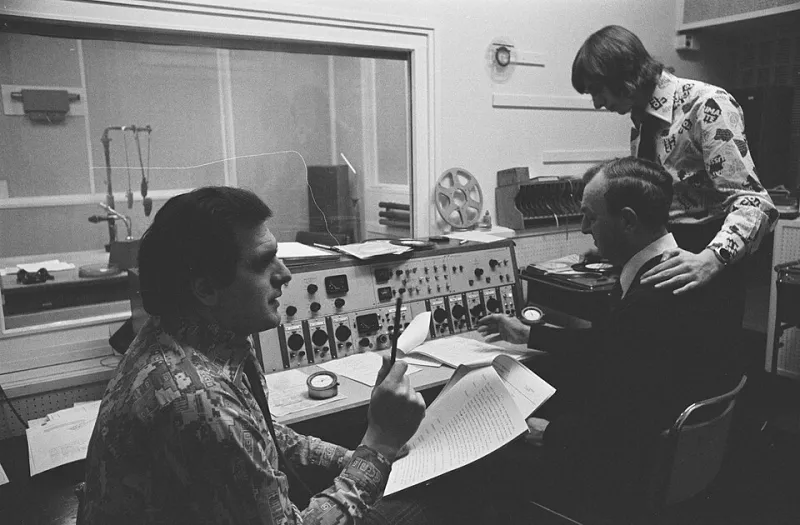
Photo: Geoff Charles, CC BY-SA 4.0, via Wikimedia Commons
Creative partnerships don't usually fall apart because people stop caring. They fall apart because nobody wrote down who was doing the invoicing.
That is not a very romantic opening for a piece about collaboration, but it is true. At Gina Cross Projects, the studio is a shared space in both senses: a physical and mental room where ideas get knocked about, and a set of agreements that let those ideas survive contact with real life. The trick is to build enough structure that people can relax into the work.
Start with an invitation, not a vibe
Before the mood board, before the funding bid, before the first rehearsal, have a proper conversation about what you are actually doing together. Not a vague chat about 'exploring possibilities'. A real one.
Ask: What are we making? Who is it for? Who owns what? What does a good outcome look like, and for whom? Who is paying for what? What happens if one of us gets a paid job elsewhere or gets ill? These questions are not buzzkills. They are the difference between a project that breathes and one that quietly suffocates.
For UK artists and producers, this matters even more when you are working across sectors. A community organiser in Leeds, a filmmaker in Bristol and a curator in Manchester will all have different assumptions about timescales, decision-making and credit. Name those assumptions early. A short written note of understanding is not bureaucracy. It is a kindness to future-you.
Put the unglamorous bits on the table
Money is not a dirty word. If the budget is £500, say £500. If there is no budget, say that too, and be honest about what you are asking people to give. Unpaid opportunities have a habit of becoming unpaid obligations.
At Gina Cross Projects, we are interested in a studio model that treats access and payment as part of the creative brief, not an afterthought. That might mean paying for BSL interpretation, covering childcare, or budgeting for travel that does not involve three buses and a prayer. It might mean deciding early that a collaborator gets a fee instead of a 'great opportunity'. These choices shape who can say yes.
Credit is part of this conversation. Agree wording early, especially for co-created work. Co-created means co-credited, not 'supported by' in 8pt type at the bottom of a poster. If the work will be documented, licensed or toured, talk about that now. The long tail of a project is often longer than the project itself.
Build a rhythm that can absorb surprises
Spontaneity is easier when people know where the edges are. A 20-minute check-in every fortnight, a shared folder, a simple decision log: these are not exciting, but they create a communal memory. They stop the same conversation happening four times in four different inboxes.
Try to separate the big decisions from the small ones. Who needs to sign off on the overall shape? Who gets to choose the paint colour, the edit, the running order? A clear rhythm gives you room to change your mind without the whole thing falling over. It also gives quieter collaborators a route in. Not everyone thinks best on a rushed video call.
Make disagreement legible
Conflict is not a sign that collaboration has failed. It is often a sign that people are actually invested. The problem is when disagreement turns into guesswork.
Build in review points: moments where you can ask, honestly, whether this is still working. Give each other permission to change shape. And yes, build in exit ramps. A partnership that can end well is a partnership that can begin well. This is especially important in community settings, where the people involved may have long histories with local authorities, funders or each other. A graceful exit is part of good practice.
Let the public outcome show the joins
At Gina Cross Projects, we are drawn to work that does not hide its own construction. That might be a screening with a rough-cut Q&A, a zine that includes notes from the edit, or a panel where collaborators speak for themselves rather than being spoken about.
The public outcome does not have to be polished to be generous. It has to be honest about what it is. If the project was messy, say so. If a plan changed, explain why. Audiences in the UK are perfectly capable of holding complexity. What they tend to resist is being sold a story that has had all the interesting bits sanded off.
A practical starter kit
- Write a one-page agreement: purpose, roles, money, credit, review points and exit routes.
- Name a decision-maker for each part of the project, even if that person is 'the group'.
- Budget for access and care from the start.
- Keep a shared notes doc that anyone can read.
- Agree how the work will be documented, credited and licensed.
- Schedule a check-in halfway through specifically to ask: is this still the right shape?
- End with a conversation, not just an invoice.
The studio as a shared space is not a metaphor for us. It is a working method. It means making room for people to be ambitious and human at the same time. That is not always tidy, but it is usually worth it.